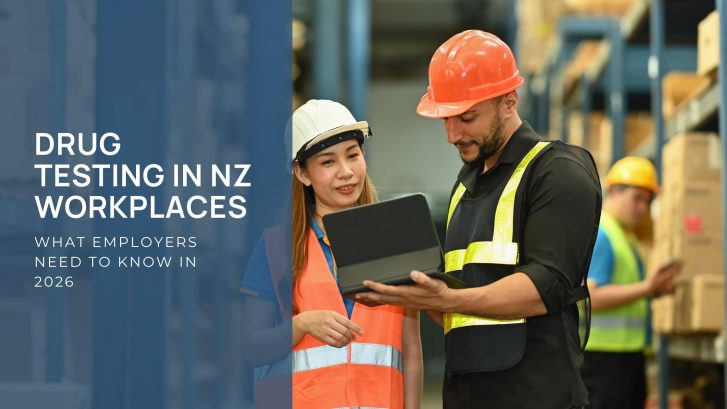
What Employers Need to Know in 2026
Workplace drug testing in New Zealand has never been more relevant. As businesses balance productivity, safety, and employee well-being, the stakes are rising. In 2026, employers across industries are asking the same question: how do we manage drug use in the workplace fairly, legally, and effectively?
With new testing technologies, evolving legislation, and increasing awareness of health and safety risks, employers must stay up to date. This guide provides a comprehensive overview of drug testing in NZ workplaces in 2026, covering legal requirements, best practice policies, and the importance of reliable drug testing kits like those from Smith BioMed.
What Employers Must Know About Drug Testing in 2025
New Zealand law doesn’t mandate workplace drug testing across the board, but it does set clear expectations around safety and employee rights. Employers need to strike a balance.
- Health and Safety at Work Act (HSWA): Requires employers to take all practicable steps to ensure a safe workplace. This may include drug testing in safety-sensitive roles.
- Privacy Act: Employers must handle testing data confidentially and only collect what is necessary.
- Employment Agreements: Testing must be included in contracts or policies; employers cannot test arbitrarily.
- Case law: Tribunal rulings continue to shape what is considered fair and reasonable, particularly around random testing.
Getting this wrong can expose businesses to legal risk. A well-documented policy that employees are aware of is essential.
Why Workplace Drug Testing is on the Rise
Workplace safety has always been a cornerstone of New Zealand’s employment culture. But in recent years, concerns about drug and alcohol use at work have grown.
- Accidents and productivity losses: Impairment can increase the risk of workplace injuries and reduce efficiency.
- Industry hotspots: High-risk sectors, such as construction, transportation, healthcare, and manufacturing, face stricter expectations regarding testing.
- Social trends: Drug use patterns are changing, with an increase in recreational drug availability making workplace vigilance more critical.
For many employers, drug testing isn’t just about compliance; it’s about creating a safer and more reliable workforce.
Types of Workplace Drug Testing
Employers typically use different testing methods depending on circumstances:
- Pre-employment testing: To screen candidates before hiring.
- Random testing: Effective in safety-sensitive industries but must be backed by policy.
- Post-incident testing: After accidents or near-misses, to determine if impairment played a role.
Reasonable cause testing: When behaviour suggests possible drug use.
Testing methods available:
- Urine testing: Common and cost-effective.
- Saliva/oral fluid testing: Increasingly popular for its speed and ability to detect recent use.
- Hair testing: Longer detection window, and less common in NZ workplaces.
For preliminary testing, Smith BioMed offers both urine and saliva drug testing kits, as well as giving workplaces flexible and reliable options for on-site screening.
Smith BioMed’s multi-test urine cup is specifically designed for workplace testing and is manufactured to meet the AS/NZS 4308:2008 standard. The other tests Smith Biomed sells are for screening purposes.
Best Practice for Implementing a Drug Testing Policy
A clear, transparent policy is the foundation of effective workplace testing. Employers should:
- Define purpose and scope: Explain why testing is necessary and who it applies to.
- Communicate expectations: Ensure staff understand the policy before it is enforced.
- Train managers: Equip leaders to recognise signs of impairment and follow correct procedures.
Protect confidentiality: Handle results sensitively to maintain trust.
Your SOP (Standard Operating Procedure) should also include a clear requirement that any preliminary positive urine test result must be followed by a confirmation test conducted by a licensed laboratory. This ensures accuracy, legal defensibility, and compliance with workplace testing standards.
Done well, a drug testing policy doesn’t just protect businesses; it fosters a culture of safety.
Drug Testing Support, Rehabilitation, and Culture
Drug testing shouldn’t be about “catching people out.” A supportive approach goes further in building long-term results.
- Employee Assistance Programmes (EAPs): Offering confidential counselling and support.
- Rehabilitation opportunities: Helping employees address issues rather than simply disciplining them.
- Workplace culture: Framing drug testing as part of a wider commitment to health and safety.
Employers who approach testing with compassion often see stronger loyalty and better outcomes than those who focus solely on enforcement.
Common Employer Questions
Can employees refuse drug testing?
Yes, but refusal may be treated as a policy breach if testing is a condition of employment.
What happens if a test is positive?
Employers should follow their policy, which may include disciplinary action, retesting, or offering support. If the initial result was from a preliminary urine or saliva test, the next step should always be laboratory confirmation before any final decisions are made.
How often should testing be done?
Frequency depends on industry risk and policy design. Safety-sensitive roles often require more regular testing.
Are home test kits suitable for workplaces?
They can be useful for preliminary screening, but are best paired with professional testing for accuracy and legal defensibility.
The Future of Drug Testing in NZ Workplaces
Technology is reshaping workplace drug testing in 2026.
- Faster, point-of-care results are reducing downtime.
- AI-driven data analysis may enhance detection accuracy.
- Changing legislation and attitudes may shift expectations around cannabis and prescription drug use.
- Proactive policies will become a competitive advantage, showing staff and clients that safety is taken seriously.
Staying ahead of these trends will help businesses protect both their people and their reputation, and Smith BioMed’s urine and saliva drug test kits provide reliable, preliminary results.
Next Steps for Workplace Drug Testing
Drug testing in NZ workplaces is becoming a key part of managing safety, compliance, and culture. Employers need to:
- Understand the legal framework.
- Choose the right type of testing for their business.
- Implement fair, transparent policies.
- Balance safety with support and rehabilitation.
The big question for employers in 2026 is simple: Is your workplace prepared to handle the challenges of drug testing fairly and effectively?
If your business hasn’t reviewed its drug testing policy recently, now is the time. A proactive approach today can prevent costly risks tomorrow.